
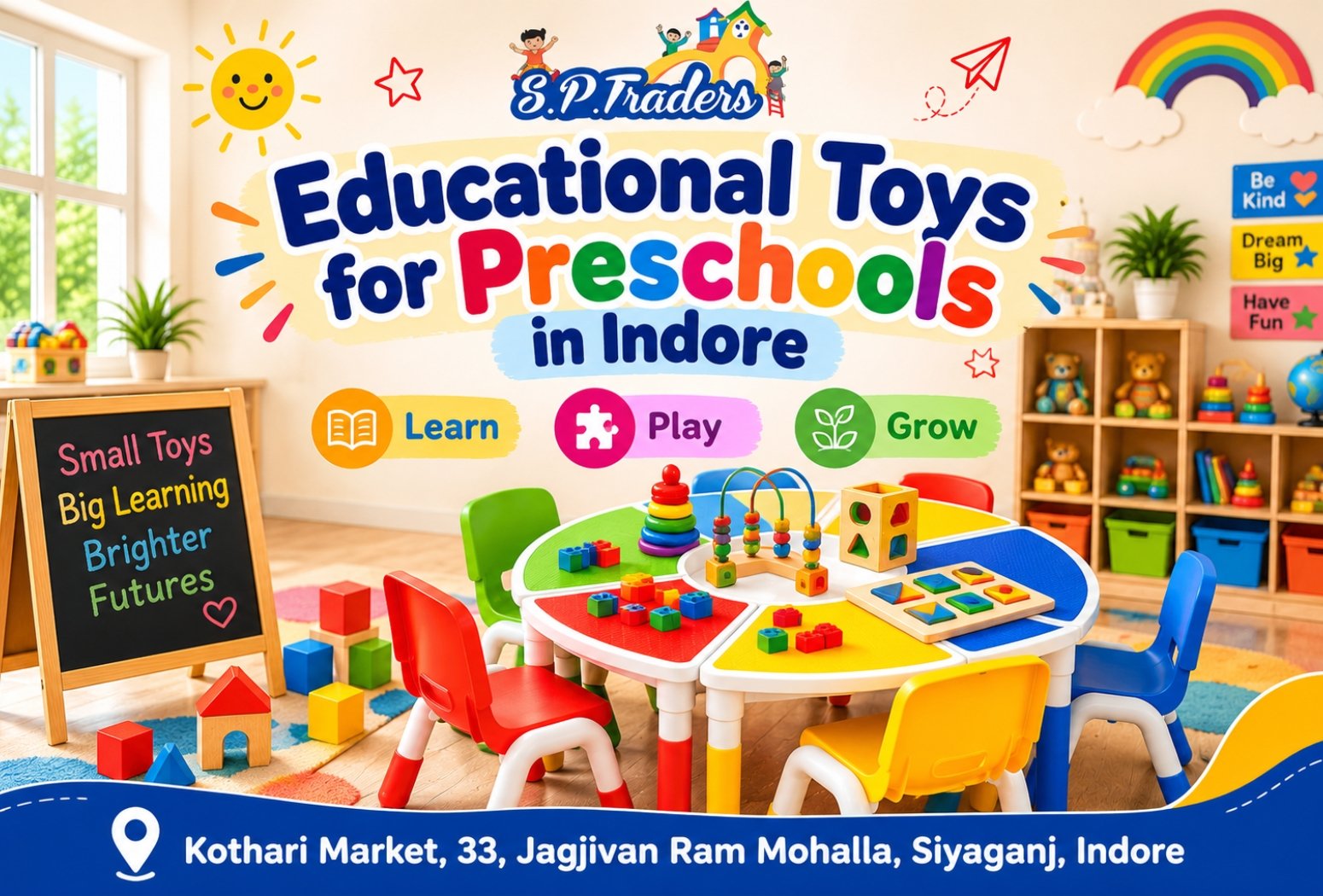
Choosing the right learning materials is an important part of creating an engaging preschool environment. Educational Toys for Preschools in Indore help children explore basic concepts through play while developing creativity, communication, coordination and problem-solving skills. Age-appropriate toys also encourage children to participate in classroom activities and learn at their own pace.
Schools looking for a School Educational Toys Supplier in Indore should consider product safety, durability, educational value and age suitability. A carefully selected collection of toys can support activities related to language, mathematics, creative thinking and social development.
Preschools researching an Educational Toys Supplier in Siyaganj, Indore can compare available products according to classroom requirements. Institutions purchasing several sets may also explore Educational Toys Wholesale in Siyaganj and evaluate product quality, quantities and costs before making a decision.
From alphabet puzzles and counting boards to building blocks and pretend-play sets, educational toys provide children with opportunities to learn by doing. This guide explains the main types of preschool toys, their benefits and the important factors to consider before purchasing them.
1. What Are Educational Toys for Preschools?
Educational toys are play materials designed to support children’s learning and development. They introduce basic concepts through practical activities, allowing children to explore ideas instead of simply memorising information.
For example, alphabet boards introduce letters, number puzzles support counting, and shape sorters help children recognise different forms. These activities can strengthen observation, concentration, memory and early reasoning skills.
Schools exploring Preschool Learning Toys in Kothari Market, Indore may consider puzzles, stacking toys, matching cards and building blocks. The final selection should depend on children’s ages, classroom activities and learning objectives.
2. Types of Educational Toys for Preschools
A. Alphabet and Language Toys
Alphabet puzzles, letter cards, picture books and storytelling sets help children become familiar with letters, sounds and new words. Teachers can use these materials during group activities, storytelling sessions and individual learning exercises.
Picture-matching games can also encourage children to describe objects, recognise familiar words and communicate with classmates. These activities provide a foundation for listening, speaking and early reading readiness.
B. Counting and Mathematics Toys
Counting beads, number boards, shape sorters and pattern games introduce basic mathematical concepts. Children can practise counting objects, comparing quantities, identifying shapes and recognising simple sequences.
Teachers can make mathematics more engaging by using toys during short, structured activities. Repeating these exercises with different materials can help children gradually become more comfortable with numbers.
C. Building Blocks and Construction Sets
Building blocks, stacking cups and age-appropriate construction toys encourage children to create structures and experiment with different designs. These activities support spatial awareness, hand-eye coordination, creativity and problem-solving.
Teachers can introduce simple challenges, such as building a tower or creating a structure using particular shapes. Children learn to test ideas, make adjustments and understand that mistakes are part of the learning process.
D. Puzzles and Matching Games
Puzzles encourage children to identify shapes, colours, pictures and relationships between objects. Matching games help develop observation, visual recognition, concentration and memory.
Schools should select puzzles with different difficulty levels. Simple puzzles can introduce basic matching skills, while more complex designs can provide additional challenges as children’s abilities develop.
E. Pretend-Play and Role-Play Toys
Toy kitchens, pretend medical kits, miniature household items and role-play sets allow children to explore familiar situations through imagination. These activities can help children understand everyday experiences and express their ideas.
Group role-play also encourages cooperation, sharing and communication. Teachers can guide children to take turns, follow simple rules and create stories together.
F. Sensory and Creative Learning Toys
Creative materials, textured blocks, drawing tools and age-appropriate sensory toys allow children to explore different textures, colours, shapes and materials. These activities can support curiosity, sensory exploration and creative expression.
When choosing sensory toys, schools should check material safety, age recommendations and cleaning requirements. Products containing small detachable parts may be unsuitable for younger children because of choking risks.
3. Benefits of Educational Toys in Early Childhood
A. Supports Cognitive Development
Educational toys encourage children to observe, compare, sort, count and solve simple problems. These experiences support the development of memory, attention, reasoning and decision-making skills.
For example, completing a puzzle requires children to examine different pieces, identify matching shapes and adjust their approach when a piece does not fit.
B. Develops Fine Motor Skills
Stacking blocks, placing puzzle pieces, turning pages and handling classroom materials help children practise controlled hand and finger movements. These skills contribute to activities such as drawing, using crayons and beginning to write.
Selecting toys with different sizes, shapes and handling requirements can provide varied opportunities to practise coordination. Activities should remain appropriate for each child’s developmental stage.
C. Encourages Communication
Group games, picture cards and pretend-play activities give children opportunities to ask questions, describe objects and explain their ideas. Teachers can introduce new vocabulary during these interactions.
Storytelling toys and picture books can also encourage children to express their thoughts. Regular communication activities help create opportunities for listening, speaking and participating in group discussions.
D. Builds Social Skills
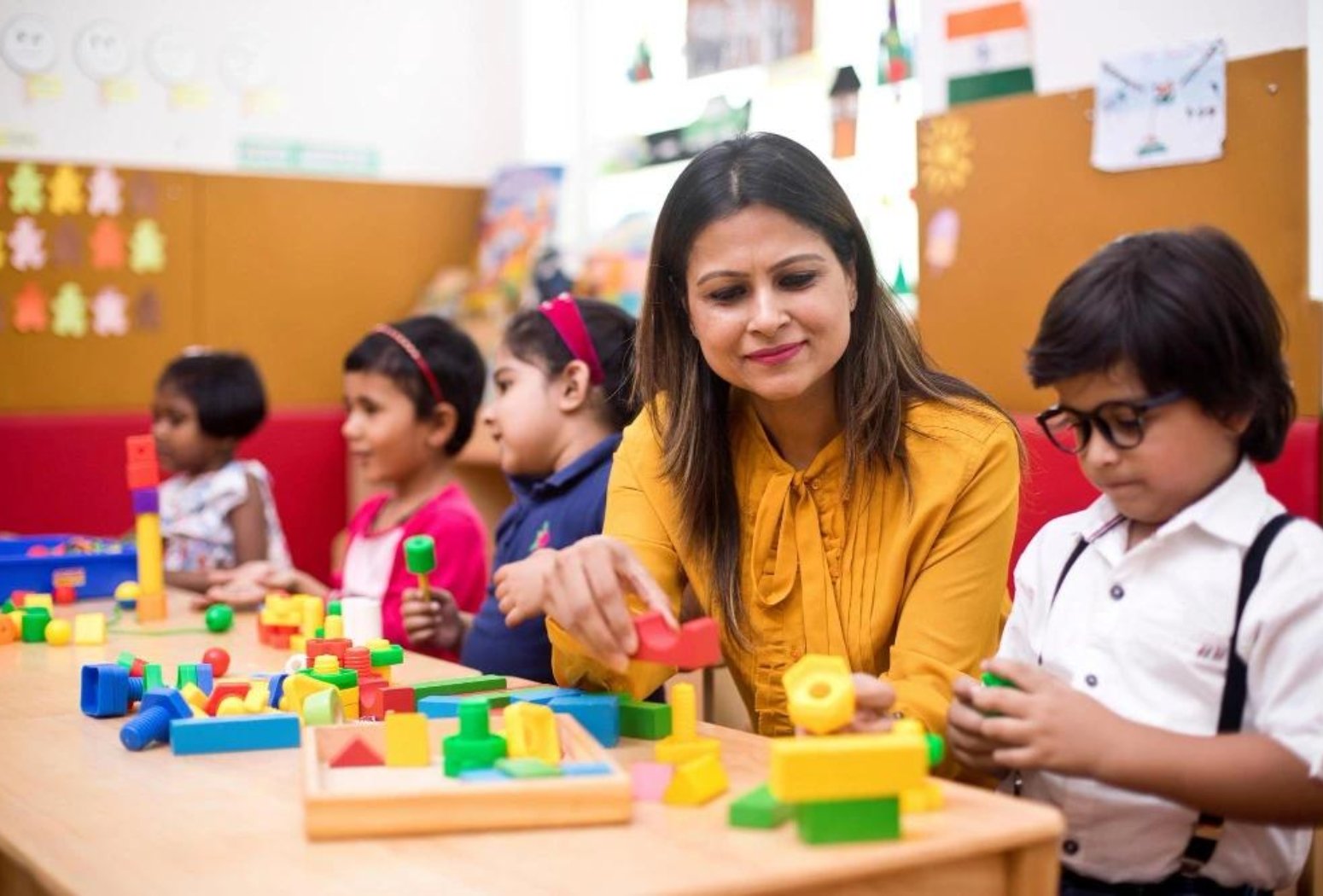
Playing together helps children practise sharing materials, waiting for their turn, following rules and cooperating with classmates. These experiences can support social awareness and emotional development.
Teachers can introduce activities in which children work together to complete puzzles or build structures. Such tasks encourage teamwork while helping children learn to respect others’ ideas.
E. Encourages Creativity and Independence
Open-ended toys allow children to create different structures, designs and stories. Unlike activities with only one correct outcome, these toys encourage experimentation and independent decision-making.
Teachers can provide children with opportunities to explore materials before introducing specific instructions. This approach allows children to discover different uses for toys while developing confidence in their ideas.
4. How to Choose the Right Preschool Educational Toys
A. Check Age Appropriateness
Choose toys according to children’s ages, abilities and developmental needs. Always review the manufacturer’s age recommendations and avoid toys with small components that may create choking hazards for younger children.
B. Prioritise Safety and Quality
Look for sturdy construction, smooth edges, suitable materials and clear product information. Toys should be appropriate for regular classroom use and should not have loose components, sharp edges or easily broken parts.
C. Match Toys to Learning Objectives
Before purchasing toys, identify the skills that classroom activities should support. Alphabet cards can support language development, counting boards can introduce numeracy, and building blocks can encourage spatial awareness.
A balanced collection should include materials for different types of learning rather than focusing entirely on one activity. Teachers can review the collection periodically to identify missing resources.
D. Consider Cleaning and Maintenance
Preschool toys are handled by multiple children throughout the day. Select materials that can be cleaned according to the manufacturer’s instructions and establish a regular cleaning routine.
Teachers should inspect toys for damage and remove broken or unsafe products from use. Proper storage and maintenance can also help keep classroom materials organised.
E. Evaluate Storage and Classroom Space
Consider the available classroom space before purchasing large toys or multiple sets. Toys that can be stored neatly make it easier for teachers to organise activities and for children to return materials after play.
Storage boxes and clearly labelled shelves can help separate different toy categories. This arrangement also makes it easier to identify missing or damaged items.
5. Finding Nursery School Toys and Learning Materials in Indore
Preschools require different types of educational materials for classroom lessons, activity corners and supervised play sessions. Comparing available products helps administrators identify items that meet their learning requirements and budgets.
Schools researching Nursery School Toys in Jagjivan Ram Mohalla, Indore can prepare a list of required products before contacting suppliers. This helps them compare options according to age suitability, material quality and intended use.
Institutions looking for Early Learning Materials in Siyaganj, Indore can consider alphabet boards, counting aids, matching cards, puzzles and creative activity supplies. The final choice should reflect the developmental needs of the children and the activities planned by teachers.
Preschools in Tulsi Nagar and Nipania, Indore, can also prepare classroom-wise purchasing lists before comparing products. Planning ahead can help schools avoid unnecessary purchases and allocate their budgets more effectively.
6. Educational Toys for Daycare Centres
Educational Toys for Daycare Centres should support supervised play, early learning, creativity and social interaction. Since daycare centres may accommodate children of different ages, toys should be organised according to developmental needs and safety requirements.
Useful options include large building blocks, picture books, shape-sorting activities, simple puzzles and pretend-play materials. Creative supplies can also give children opportunities to explore colours, textures and different ways of expressing their ideas.
Daycare staff should inspect toys regularly, follow appropriate cleaning procedures and supervise children during play. Younger children should not have access to materials containing small parts that could present choking hazards.
A well-organised toy collection can make daily activities easier to manage. Separating toys into categories also helps caregivers select suitable materials for individual children or small groups.
7. Buying Educational Toys in Bulk for Schools
Schools purchasing materials for several classrooms may consider Bulk Educational Toys in Indore to organise their requirements. A detailed list of products and quantities can help administrators compare available options and estimate overall spending.
Before placing a bulk order, schools should follow these steps:
- Prepare a requirement list: Identify the age groups, classrooms and activities that need educational materials.
- Set a budget: Allocate funds across language, mathematics, construction, creative play and other learning categories.
- Compare specifications: Review dimensions, materials, age recommendations and safety information.
- Confirm quantities: Estimate the number of sets required for individual activities and group use.
- Check availability: Confirm stock, delivery timelines, replacement arrangements and order terms directly with the supplier.
- Plan storage: Ensure that the school has enough space to organise and maintain the purchased items.
Bulk purchasing may simplify procurement when schools need multiple sets. However, administrators should compare quality and educational value rather than making decisions based only on price.
8. How to Evaluate a Preschool Toy Supplier
When comparing suppliers, schools should review the range of products available, product descriptions and information about materials and age suitability. Clear specifications make it easier to determine whether a toy is appropriate for the intended classroom activity.
Administrators can also ask about minimum order quantities, delivery arrangements, payment terms and the procedure for addressing damaged items. These details are especially important when purchasing products for several classrooms.
S.P. Traders’ website, can be reviewed to explore relevant product categories. Schools should contact the business directly to confirm current availability, specifications and purchasing arrangements before placing an order.
9. Common Mistakes to Avoid When Buying Preschool Toys
Choosing Toys Only for Their Appearance
Bright colours and attractive designs do not automatically make a toy educational. Schools should consider the skills a toy can support and whether children can use it safely.
Ignoring Age Recommendations
A toy suitable for older children may not be appropriate for toddlers. Administrators and teachers should check age guidance and potential hazards before purchasing any product.
Buying Too Many Similar Toys
A collection containing only one type of toy may limit learning opportunities. Schools should aim for a balance of language, mathematics, construction, sensory and pretend-play materials.
Overlooking Durability
Toys used daily should withstand regular handling. Checking construction, material quality and care instructions can help schools make more informed purchasing decisions.
Forgetting Storage and Cleaning
Schools should consider how toys will be stored and maintained before buying them. A simple system for cleaning, organising and inspecting materials can help maintain a safer learning environment.
10. Why Choose S.P. Traders for Educational Toys?
Choosing the right supplier is important when purchasing educational toys for preschools, nursery schools and daycare centres. Educational Toys for Preschools in Indore should be safe, age-appropriate and useful for children’s early learning and development. Schools searching for a School Educational Toys Supplier in Indore should compare product quality, educational value, available options and budget before making a purchasing decision.
S.P. Traders provides a website where schools and educational institutions can explore relevant product categories and identify materials that may suit their requirements. Before placing an order, buyers should confirm product availability, age recommendations, material quality and current pricing directly with the business.
Here are some factors to consider when evaluating S.P. Traders for your educational toy requirements:
- Product suitability: Choose toys according to children’s ages, developmental needs and classroom learning objectives.
- Educational value: Look for materials that support language development, early mathematics, creativity, coordination and problem-solving.
- Quality and safety: Review product specifications and check that toys are appropriate for the intended age group.
- Budget planning: Compare prices and quantities to select products that fit your institution’s budget.
- Bulk purchasing requirements: Schools ordering for multiple classrooms should confirm available quantities, delivery arrangements and applicable order terms.
Preschools planning to purchase Educational Toys for Preschools in Indore can visit the official website, S.P. Traders, to explore relevant products and contact the business for further details. Comparing product information with classroom requirements can help institutions make practical purchasing decisions.
Frequently Asked Questions – Educational Toys for Preschools in Indore
Q1. What are the best educational toys for preschools?
Useful options include alphabet puzzles, counting toys, shape sorters, building blocks, matching games, picture books and pretend-play sets. Each type supports different learning skills: counting toys introduce early mathematics, puzzles encourage problem-solving, and pretend-play materials support communication. Schools should select toys based on children’s ages, developmental needs and classroom learning objectives.
Q2. How can schools choose Educational Toys for Preschools in Indore?
Schools should compare age suitability, safety, durability, educational value, cleaning requirements and budget. Preparing a classroom-wise requirement list can help administrators identify the most useful products before contacting suppliers. S.P. Traders It is also important to review product specifications and confirm availability and pricing before placing an order.
Q3. Where can schools find an Educational Toys Supplier in Siyaganj, Indore?
Schools can research suppliers serving the area, review their product categories and contact them to confirm current availability, specifications, pricing and delivery arrangements. Before choosing a supplier, administrators should compare the suitability of the toys, the quality of materials and the purchasing terms. This process helps institutions select products that fit their educational and operational needs.
Q4. Is Educational Toys Wholesale in Siyaganj suitable for large school orders?
Wholesale purchasing may be worth exploring when schools need several sets or multiple categories of toys. Administrators should compare product quality, quantities, total costs and order terms before making a decision. They should also confirm minimum order quantities, delivery timelines and replacement arrangements to ensure that the purchase meets classroom requirements.
Q5. Which Preschool Learning Toys in Kothari Market, Indore should schools consider?
Schools can consider alphabet and number toys, puzzles, building blocks, matching games and age-appropriate creative materials. Alphabet resources can support language development, while number games introduce counting and simple mathematical concepts. The selection should reflect classroom objectives, children’s ages, product safety and the types of activities teachers plan to conduct.
Q6. What should schools consider when buying Nursery School Toys in Jagjivan Ram Mohalla, Indore?
Schools should evaluate age recommendations, material quality, potential choking hazards, durability and ease of cleaning. Toys should also suit the activities planned for the children and be manageable within the available classroom space. A balanced collection of puzzles, blocks, matching games and creative materials can provide different learning experiences without relying on one type of toy.
Q7. Which Early Learning Materials in Siyaganj, Indore are useful for young children?
Alphabet boards, counting aids, shape sorters, puzzles, matching cards and creative activity materials can support early learning when used appropriately. Teachers can use these resources to introduce letters, numbers, shapes, colours and basic problem-solving activities. Schools should check age suitability and material safety before purchasing items for classroom use.
Q8. What should daycare centres consider when selecting toys?
Daycare centres should consider children’s ages, supervision requirements, cleaning needs and the learning objectives of planned activities. Toys should be organised so younger children cannot access unsuitable components. Large blocks, picture books, simple puzzles and pretend-play materials can support S.P. Traders different activities, provided the products are appropriate for the children using them.
Q9. What should schools check before ordering educational toys in bulk?
Schools should confirm quantities, product specifications, safety information, availability, delivery timelines, total cost and applicable order policies before placing an order. It is useful to prepare a classroom-wise list so that the required materials are distributed appropriately. Administrators should also consider storage and maintenance to ensure that purchased toys can be used effectively.
Q10. How often should preschool toys be inspected?
Toys should be inspected regularly and whenever damage is noticed. Teachers and caregivers should check for loose parts, sharp edges, broken components and other potential hazards. Cleaning should follow the manufacturer’s instructions, S.P. Traders and broken or unsafe items should be removed from use promptly. Regular checks help maintain a safer environment for classroom activities.
Conclusion – Educational Toys for Preschools in Indore
Educational toys can make preschool learning more interactive by supporting language development, early mathematics, creativity, coordination and social skills. Schools should choose materials that are safe, age-appropriate, durable and aligned with classroom objectives.
For institutions comparing Educational Toys for Preschools in Indore, a planned purchasing process can help identify useful products while avoiding unnecessary spending. By reviewing product specifications, checking safety requirements and comparing suitable options, preschools and daycare centres can create learning environments that encourage children to explore, practise skills and learn through play.